
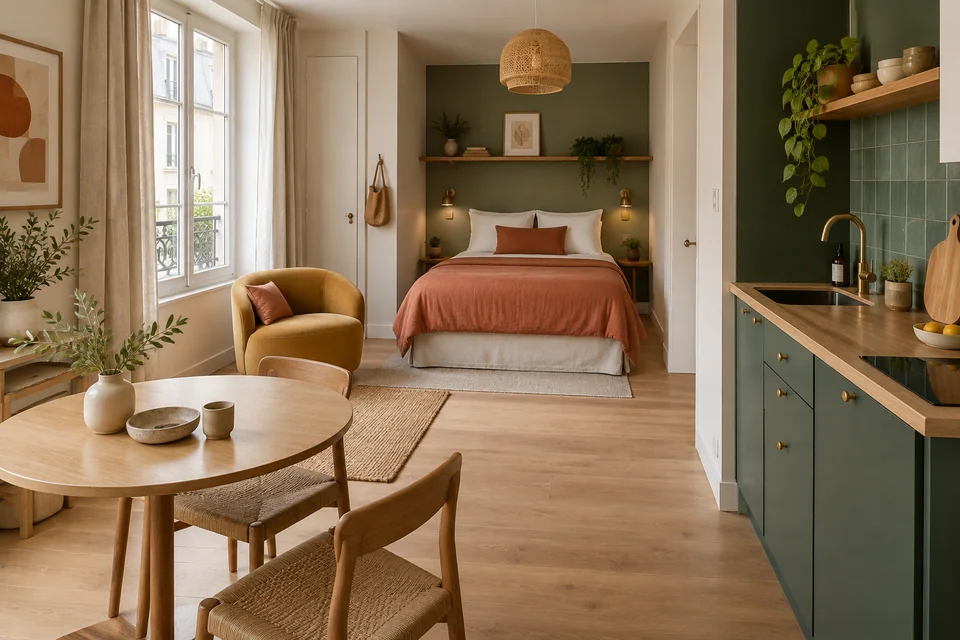
Describe the guest experience before the look
Define whether the space is primarily for quiet weekends, family stays or work away from home. Focus on activities rather than assumptions about what every guest wants. Reading, unpacking, sharing a meal and finding a place for a bag are useful starting points. Record which needs belong to the photographed room and which need attention elsewhere in the property.
Think through a simple arrival sequence: entering with luggage, finding a seat and settling in. Then describe an evening in the room. This exercise can expose conflicting wishes, such as adding more furniture while wanting a clearer sense of space. Keep the resulting priorities in the brief rather than trying to solve every question with decorative accessories.
Give the brief an operational layer
A concept should open a discussion with the person who cleans, maintains and manages the accommodation. Do not infer durability or suitability from the appearance of a material in a picture. Ask suppliers and your own team to confirm the practical details.
Questions for the people looking after the property
- How will upholstery and textiles be maintained?
- Where can guests place luggage without blocking movement?
- Which items must be easy to repair or replace?
- What existing features must remain accessible?
Build one recognisable decorative direction
Select a palette and a small family of textures, then look at how they work together across seating, lighting and walls. Use the original room photograph to keep the discussion grounded in the real property. 3DFUZ uses AI to create decorative illustrations; these can help compare an atmosphere, but they do not verify products, dimensions, accessibility or safety requirements.
Validate the changes before presenting the result
Review the concept with the people responsible for the property before buying furniture or arranging work. Obtain measurements and check any applicable requirements independently. After changes are completed, photograph the actual accommodation for its listing. A concept is not evidence of the property’s current condition, and a decorative study does not promise bookings, occupancy, reviews or revenue.