
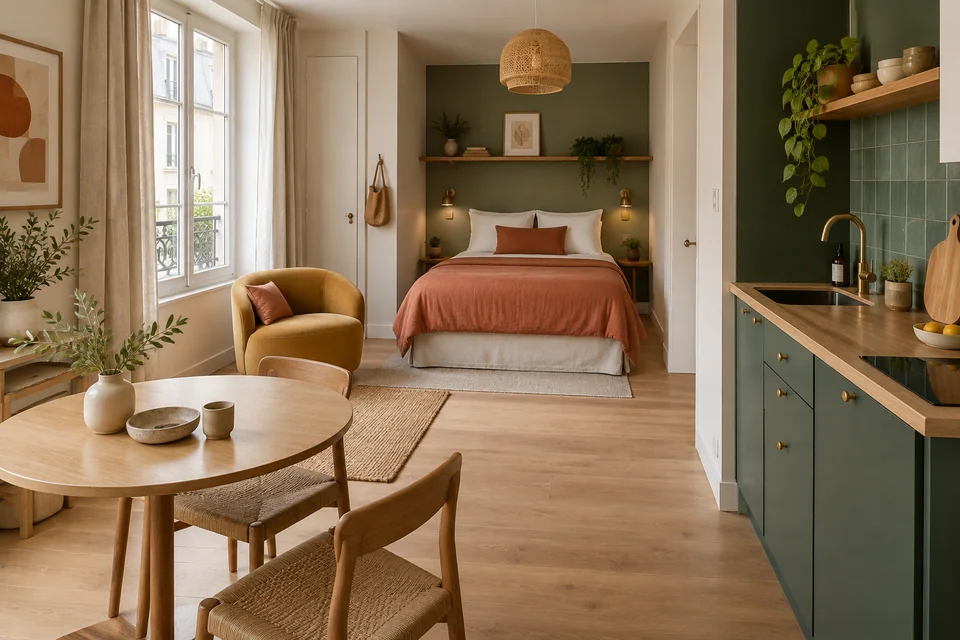
Define what should be consistent
Start by identifying the visual thread that could connect a property: a palette, the tone of timber, the character of lighting or the balance of soft and hard surfaces. A small vocabulary is often easier to discuss than a long collection of unrelated decorative references.
Photographs of the actual spaces are important. Two units may look similar yet have different light, fixed fittings or access constraints. A concept is a way to explore an intention, not evidence that a single furniture arrangement or material will work throughout a portfolio.
Keep operating requirements in the brief
The study should sit beside a separate operational brief. Cleaning routines, stock replacement, guest accessibility and compliance requirements affect real decisions even when they do not appear in a decorative illustration. Identify who will verify those points before a visual direction becomes a purchasing decision.
Questions for the owner or operator
- Distinguish guest-facing atmosphere from back-of-house needs.
- List the spaces involved rather than assuming one image covers a property.
- Confirm maintenance and replacement criteria outside the concept.
- Keep claims about capacity and safety out of visual assumptions.
Request a scope before a property-wide study
Commercial rental and serviced-apartment work is available only as an enquiry with a custom quote. Share the property type and intended scope; deliverables, spaces and price are defined before engagement. Standard residential checkout offers are not a commercial multi-unit or whole-property commission.
3DFUZ uses AI to contribute to decorative illustrations. Human professional review, verified products, shopping lists, technical drawings and fit-out management are not part of an automatic service. Illustrations must be labelled when shared. They provide no assurance of rental income, guest ratings, occupancy, regulatory approval or a particular financial result.